
Field Actions
DISPATCHAlways disconnect appliance from 230V/400V mains before opening panels. Use CAT III multimeter for circuit testing.
Frequently Asked Questions: Bosch F34
FAQ TREEWhat does error code F34 mean on a Bosch appliance?
Bosch error code F34 indicates: Bosch Serie 4 / Serie 6 / Serie 8 / HomeProfessional EcoSilence Drive: Door interlock failed to lock F34; solenoid pulse sent but lock mechanism fails to engage or confirm locked contact..
What is the root cause of Bosch error code F34?
The primary root cause for Bosch code F34 is: On Bosch washers: Jammed lock slider mechanism, broken bimetal / solenoid lock coil, bent door hinge preventing full engagement, or blown lock triac..
How do I fix or resolve Bosch error code F34?
To resolve error code F34: Inspect door latch alignment and hinge tightness. Test door lock mechanism resistance across pins 1 and 3 (~180–240 Ω). Replace door interlock switch. Turn dial to 6 o'clock (down), hold Spin button, rotate to 7 o'clock, release Spin button, turn to 12 o'clock (Off).
Is it safe to clear Bosch error code F34 by resetting power?
Resetting power (unplugging for 5–10 minutes) clears temporary memory errors. However, if Bosch code F34 persists, the physical component causing On Bosch washers: Jammed lock slider mechanism, broken bimetal / solenoid lock coil, bent door hinge preventing full engagement, or blown lock triac. must be inspected or replaced.
How do I test electrical resistance for Bosch code F34 using a multimeter?
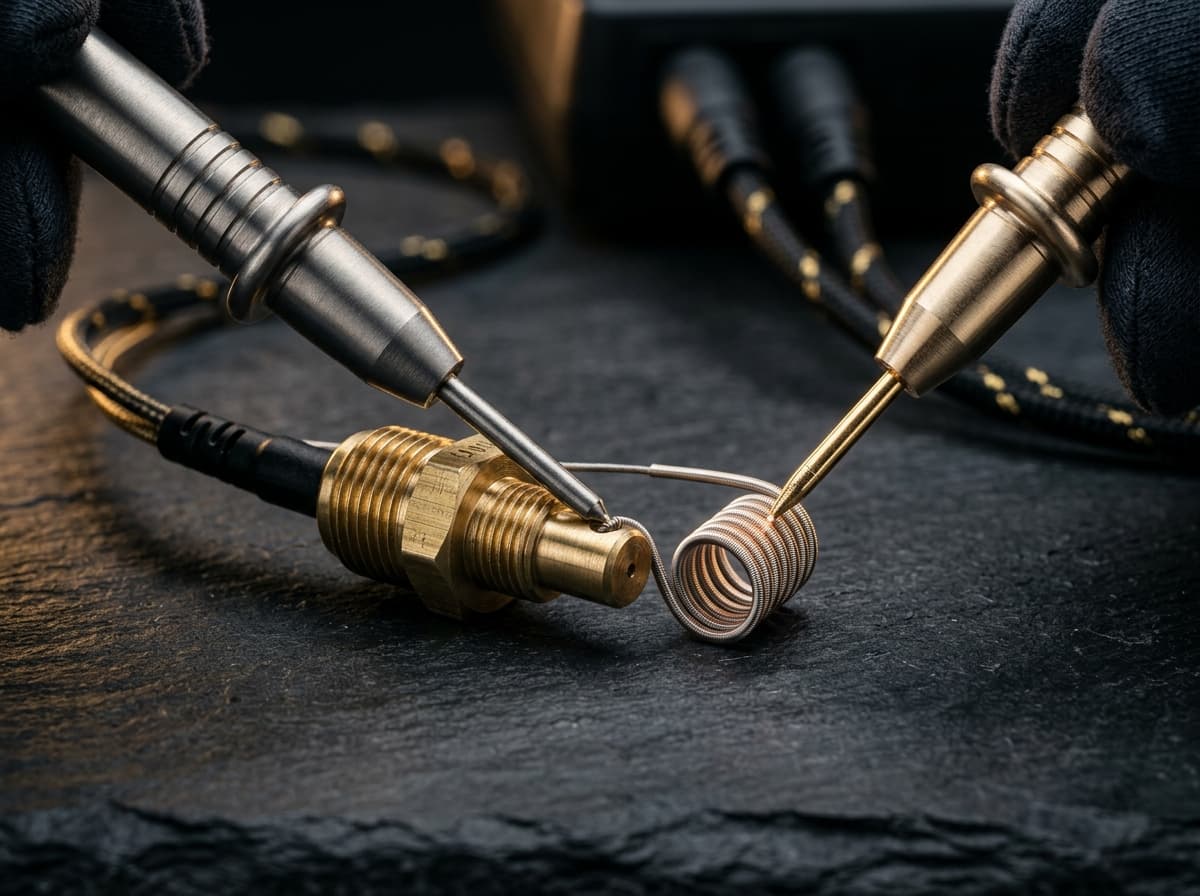
Set a digital multimeter to ohms (Ω). Disconnect power and test PTC Heater Pellet / Pulse Solenoid / Microswitch Contacts across Across PTC heater terminals on lock bezel; switch contact reads <0.2Ω when locked. Expected nominal reading is 800Ω–1.5kΩ (PTC terminals L-N) / 60Ω–120Ω (Pulse Solenoid). Tolerance: ±15%. Switch contacts must read open (OL) when unlocked and 0.0Ω–0.2Ω when fully latched..
What safety protocol must be followed before servicing Bosch code F34?
Standard electrical safety protocol: 1. Disconnect 230V mains power before opening panels. 2. Verify zero voltage at test points. 3. Allow hot water or heating elements to cool below 30°C before handling.
Community Verification
COMMUNITYDid this solution resolve the issue?