
Field Actions
DISPATCHAlways disconnect appliance from 230V/400V mains before opening panels. Use CAT III multimeter for circuit testing.
Frequently Asked Questions: Neff E005
FAQ TREEWhat does error code E005 mean on a Neff appliance?
Neff error code E005 indicates: Neff N 50 / N 70 / N 90 Slide&Hide® & CircoTherm® Pyrolytic Oven with ShiftControl: Power interlock safety relay failure E005; safety relay on power PCB fails to close power circuit to heating elements..
What is the root cause of Neff error code E005?
The primary root cause for Neff code E005 is: On Neff ovens: Burnt relay contacts, failed 12V DC coil driver transistor, or open circuit in door interlock microswitch safety chain..
How do I fix or resolve Neff error code E005?
To resolve error code E005: Disconnect mains power. Measure resistance of relay coil on power PCB (nominal ~360–420 Ω). Test door interlock microswitch contacts (< 0.5 Ω). Turn oven off, hold 'i' Info and Clock icons simultaneously on ShiftControl panel for 4 seconds, or cycle mains breaker.
Is it safe to clear Neff error code E005 by resetting power?
Resetting power (unplugging for 5–10 minutes) clears temporary memory errors. However, if Neff code E005 persists, the physical component causing On Neff ovens: Burnt relay contacts, failed 12V DC coil driver transistor, or open circuit in door interlock microswitch safety chain. must be inspected or replaced.
How do I test electrical resistance for Neff code E005 using a multimeter?
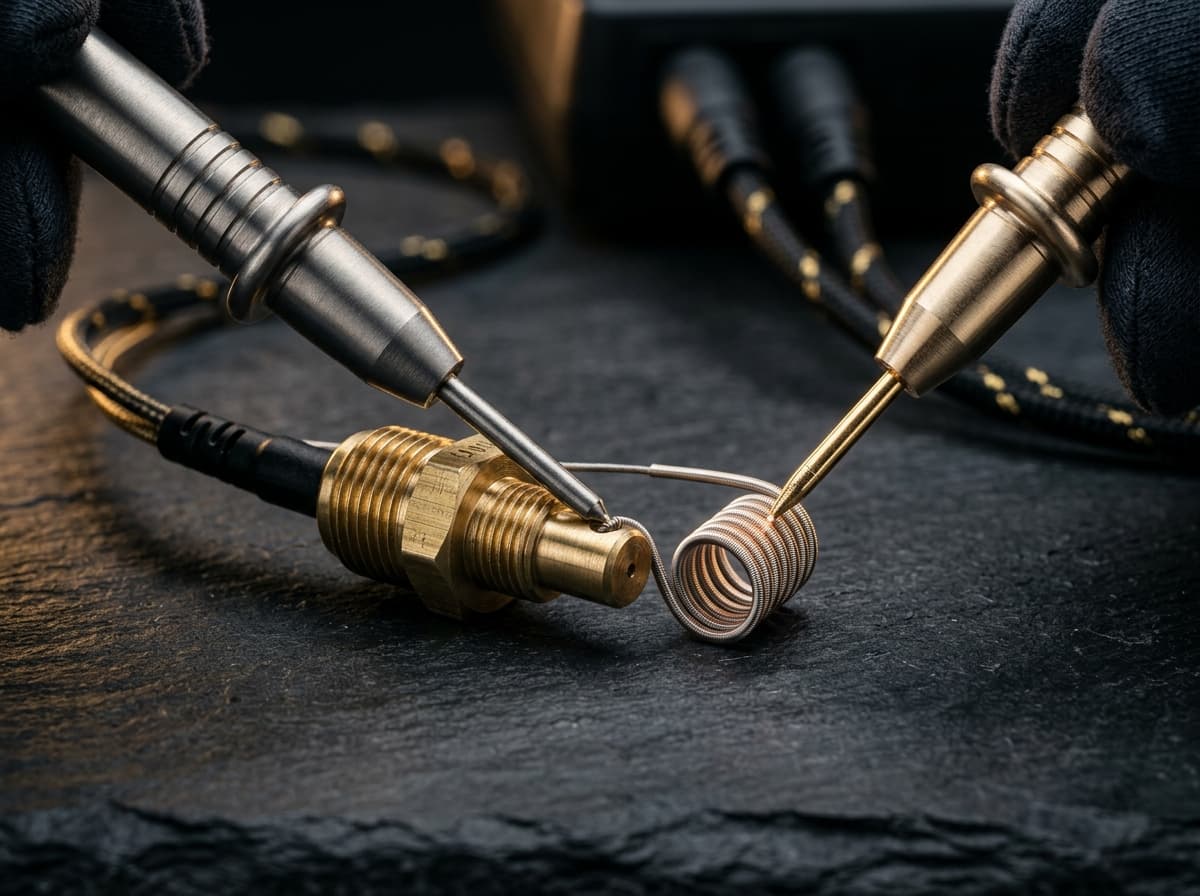
Set a digital multimeter to ohms (Ω). Disconnect power and test Immersion / Air Heating Element & Klixon Thermostat across Between element terminals (unwired). Insulation to earth casing: >20MΩ (OL). Expected nominal reading is 25Ω–28Ω (230V / 2000W) / <0.5Ω (Safety Klixon closed). Tolerance: Formula R = V²/P (±5%). Any earth leakage reading below 2MΩ will trip the domestic 30mA RCD breaker..
What safety protocol must be followed before servicing Neff code E005?
Standard electrical safety protocol: 1. Disconnect 230V mains power before opening panels. 2. Verify zero voltage at test points. 3. Allow hot water or heating elements to cool below 30°C before handling.
Community Verification
COMMUNITYDid this solution resolve the issue?