
Field Actions
DISPATCHAlways disconnect appliance from 230V/400V mains before opening panels. Use CAT III multimeter for circuit testing.
Frequently Asked Questions: Zanussi E70
FAQ TREEWhat does error code E70 mean on a Zanussi appliance?
Zanussi error code E70 indicates: Zanussi Lindo 100/300 / ZWF Front Load Washer: Temperature sensor general alarm E70; temperature measurement circuit out of plausible range..
What is the root cause of Zanussi error code E70?
The primary root cause for Zanussi code E70 is: On Zanussi (Zanussi Lindo 100/300 / ZWF Front Load Washer) models: Wash NTC sensor out of tolerance, corroded pins on NTC connector, broken wire in harness, or defective ADC input channel on MCU..
How do I fix or resolve Zanussi error code E70?
To resolve error code E70: Measure NTC resistance at room temperature 20°C (nominal 4.8–6.0 kΩ; at 60°C ~1.2 kΩ). Clean connector contacts with contact cleaner. Hold Start/Pause plus Skip/Option button simultaneously for 5 seconds until three rapid confirmation beeps clear persistent error memory.
Is it safe to clear Zanussi error code E70 by resetting power?
Resetting power (unplugging for 5–10 minutes) clears temporary memory errors. However, if Zanussi code E70 persists, the physical component causing On Zanussi (Zanussi Lindo 100/300 / ZWF Front Load Washer) models: Wash NTC sensor out of tolerance, corroded pins on NTC connector, broken wire in harness, or defective ADC input channel on MCU. must be inspected or replaced.
How do I test electrical resistance for Zanussi code E70 using a multimeter?
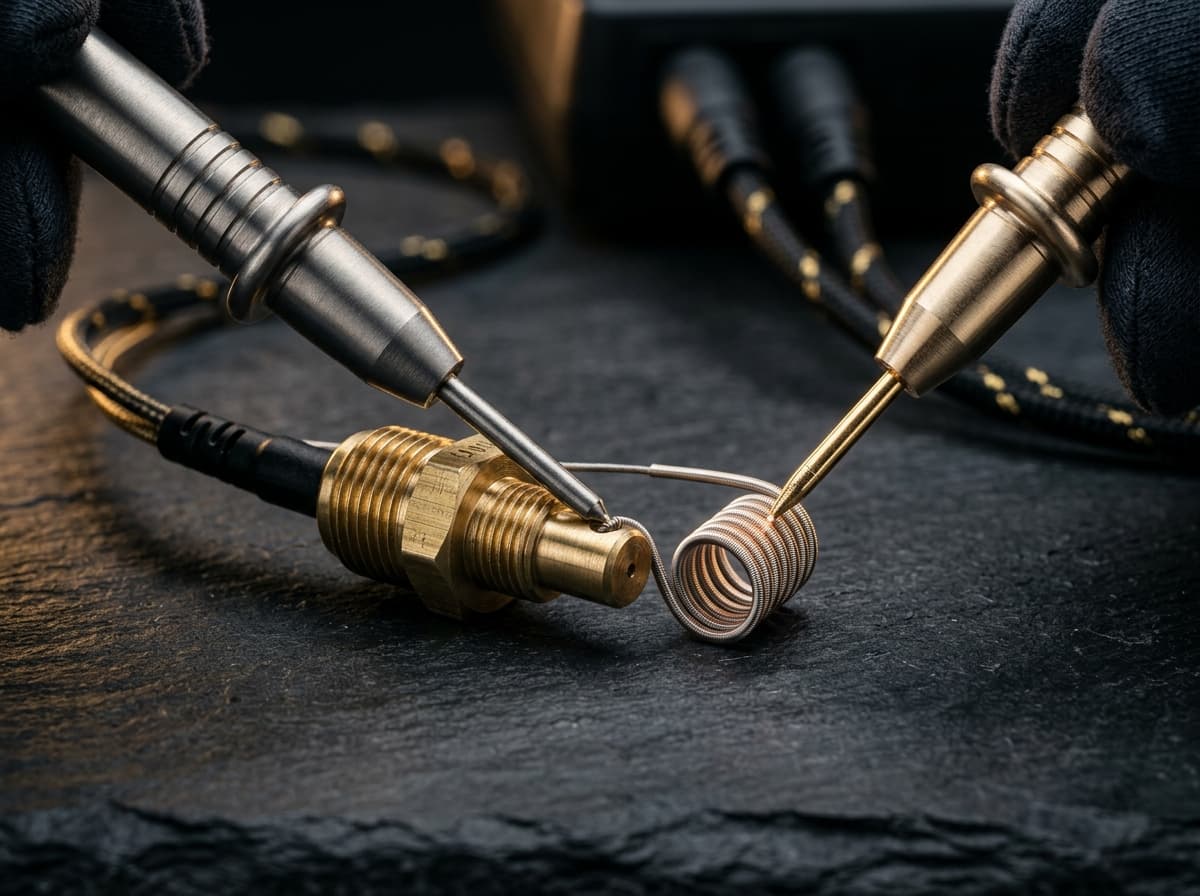
Set a digital multimeter to ohms (Ω). Disconnect power and test NTC Temperature Sensor Probe (Thermistor) across Across sensor pins 1-2 (unplugged harness). Expected nominal reading is 4.8kΩ–12kΩ (at 20°C–25°C). Tolerance: Negative temperature coefficient: resistance drops smoothly when warmed with fingers. OL = open circuit..
What safety protocol must be followed before servicing Zanussi code E70?
Standard electrical safety protocol: 1. Disconnect 230V mains power before opening panels. 2. Verify zero voltage at test points. 3. Allow hot water or heating elements to cool below 30°C before handling.
Community Verification
COMMUNITYDid this solution resolve the issue?